The Forest Farmacy, a working farm in Marshall, North Carolina.
“We’re not influencers. We’re farmers.”
The difference was never effort or talent. It is a trained eye
for what mycelium is doing while it’s still invisible.
Every week you can bring your grow to a live room and watch the founders read what’s
in front of them out loud.
$900, or 3 payments of $300 · 14-day review window · supplies ship after day 14
You’ve done the work.
You’ve kept the jar or bucket clean, watched the videos, taken notes. Maybe you can keep forty plants alive from seed. Maybe you can walk a ridge and come home with a full basket.
Then you try mushrooms, and it’s a different story. You hold a jar up to the light at 11pm, or check the bucket one more time, and you’re guessing.
That’s not a gap in you.
With most skills, you can see what you’re doing while you do it. With mushrooms, the important part happens where you can’t see it. By the time a problem shows, it’s usually been building for days or weeks.
Not a missing fact. A missing witness.
That’s what you’re buying here. Every week for six months, you can bring your grow to a live call and have the founders read it.
$900, or three payments of $300.
$900, or 3 payments of $300 · 14-day review window · supplies ship after day 14

After 35 years, Chris Parker still loses grows. The difference is what a loss tells him.
In 2018, a flood took a decade of his work in a matter of hours. And recently, with 35 years in, a contamination still cost him thousands of dollars in substrate and a month of vigilance.
So no, the trained eye doesn’t make you immune.
A Loss You Can Read Becomes A Correction. A Loss You Can’t Read Becomes A Coin Flip You Have To Take Again, Blind, From Zero.
The goal was never to stop losing grows. It’s to be able to read a loss and fix it.
That’s what the weekly calls exist for. Every week for six months, both founders lead a live group room, reading the grows and questions people bring so you learn what to look for in your own.
On the other side of that is a jar, bucket or a bag you can pick up and actually know what you’re looking at.
“Yes, but will it work for MY situation?”
That question is what the rest of this page is for. And if you landed here cold and have no idea who these two people are, there’s a full section below that starts from zero. You’re welcome here too.
Before the details, the four practical questions, answered short:
No $15,000 autoclave. No lab to get started. Chris teaches the low-budget way around the expensive myths, because that’s how he’d do it himself.
A basement shelf, a shed, a barn corner, a sawdust pile out back: your actual space is the first thing you bring to the calls, and you work with what’s real, not with a blueprint that assumes a new building.
Chris has grown mushrooms for 35 years and farms commercially in Marshall, North Carolina. This is not content. It’s his livelihood, taught.
Enroll, look through everything, and if you decide it’s not for you, your money comes back. Supplies hold until your review window has passed. Nothing arrives while you’re still deciding.
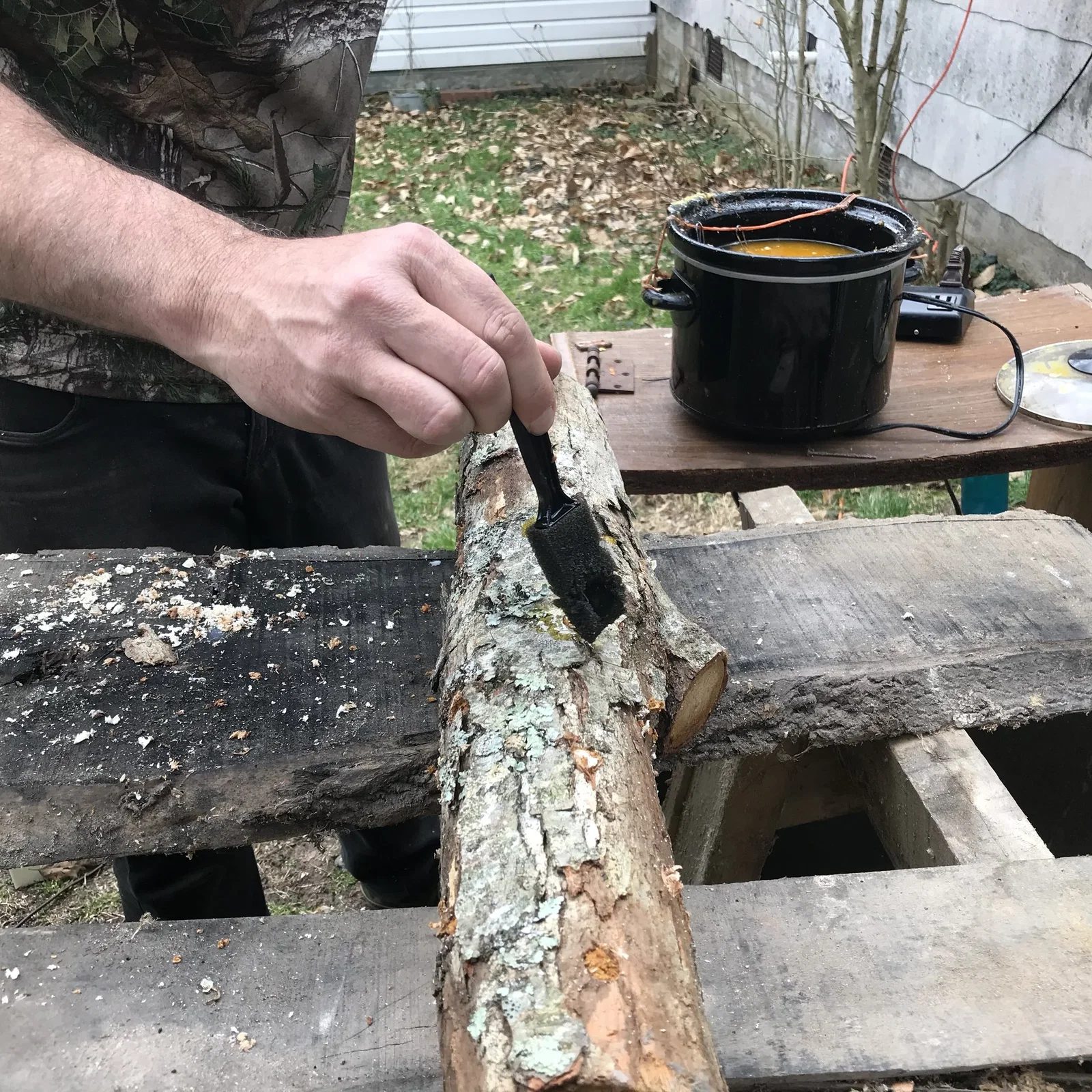
You watch Chris’s hands do the entire process, start to finish.
Not a library of loosely related videos you’re left to sequence yourself; one process, filmed in the order it actually has to happen.
You’ve probably collected plenty of information already. The modules aren’t more information. They are the order, the part free content never gives you.
A weekly live call in progress, Zoom gallery view. Take one during any upcoming call.
Every week, live, you bring your grow, your photos, and your questions.
Chris reads grows the way you read a sentence, and on these calls you watch him do it on real student grows until the eye starts becoming yours.
The calls are a group room, and that’s deliberate: you learn as much from the jar or bucket someone else holds up as from your own.
The course is three months. The call access runs six months. The support is built to outlast the curriculum; the questions don’t stop when the modules do.
Private time with Chris runs $150 an hour. The weekly calls come with the course.
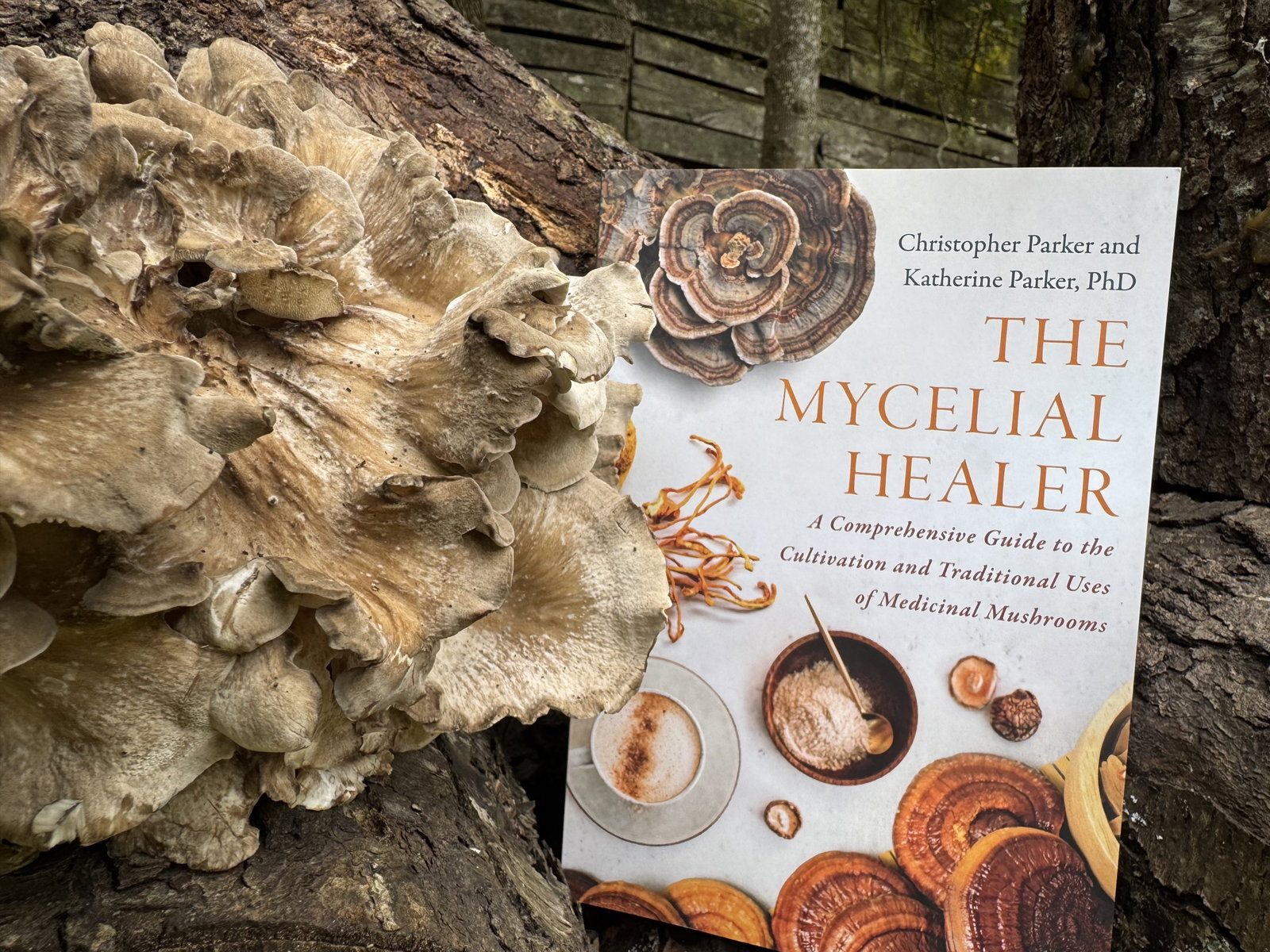
A copy of The Mycelial Healer, the book Chris and Katherine wrote for Chelsea Green, plus living genetics and growing supplies: liquid culture, a spore syringe, plug and sawdust spawn, grain spawn, jar lids.
The supplies arrive in two shipments across the course, and the first goes out after day 14, on purpose.
Nothing perishable leaves the farm while you’re still deciding.
A community thread, or students on a call. Any real thread with names blurred works.
The same six months as the calls: a room full of people running the same process you are, with the founders in it every week, while you run your first real cycles.
Pete, a farmer who came in after trying it alone off the internet, names the community as one of the two things that made it work: “I like the community aspect… and that coaching from Chris.”
That’s the room you’re joining, for the exact stretch of months when you’ll need it.
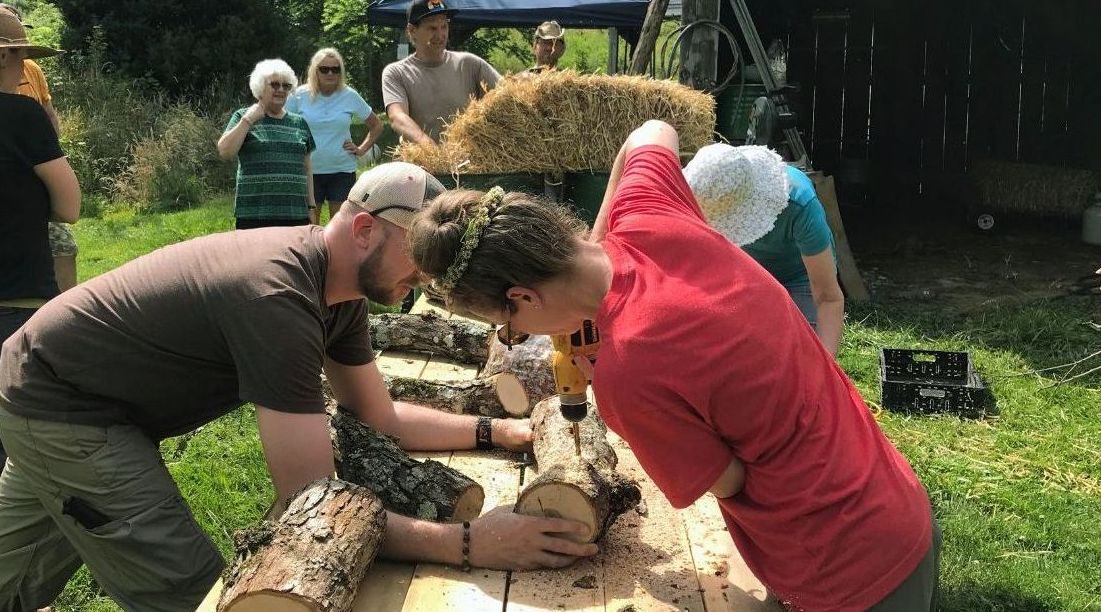
Real days on the real farm in Marshall, June and September.
Historically a $350 class on its own. Farm days cap at 25 people total, and fewer than 12 of those seats go to online students.
That’s not a marketing number. It’s the size of a day that stays useful on a working farm.
Maybe you found this page without the workshop. Maybe your history with this craft is the saved videos, the forum threads, a kit that flushed once and then sat there.
The problem was never missing information.
The problem is that free content arrives in fragments, in no order, with no one on the other end. You were left to be your own teacher in a craft you hadn’t learned yet.
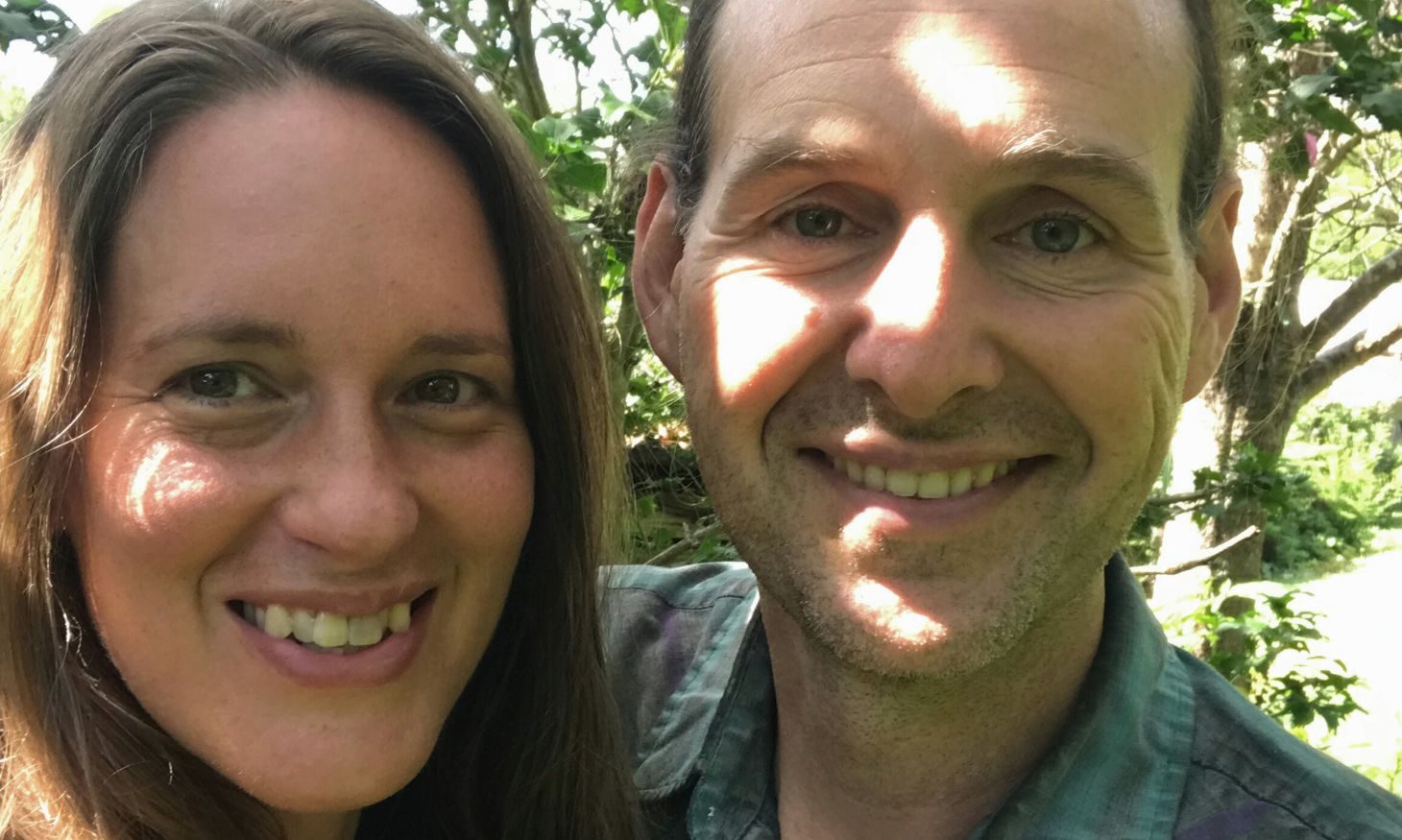
Chris Parker has grown mushrooms for 35 years. He’s a member of the Eastern Band of Cherokee Indians, farms commercially in Marshall, North Carolina, and maintains a culture library adapted specifically to the Southern Appalachians.
Katherine Parker, PhD, is a research psychologist who has spent 15 years designing curricula. Together they wrote The Mycelial Healer for Chelsea Green, and as Katherine tells it, the publisher pursued them for about a year before they said yes.
Chris calls it the big recycling. They call it the Waste-to-Abundance Cycle.
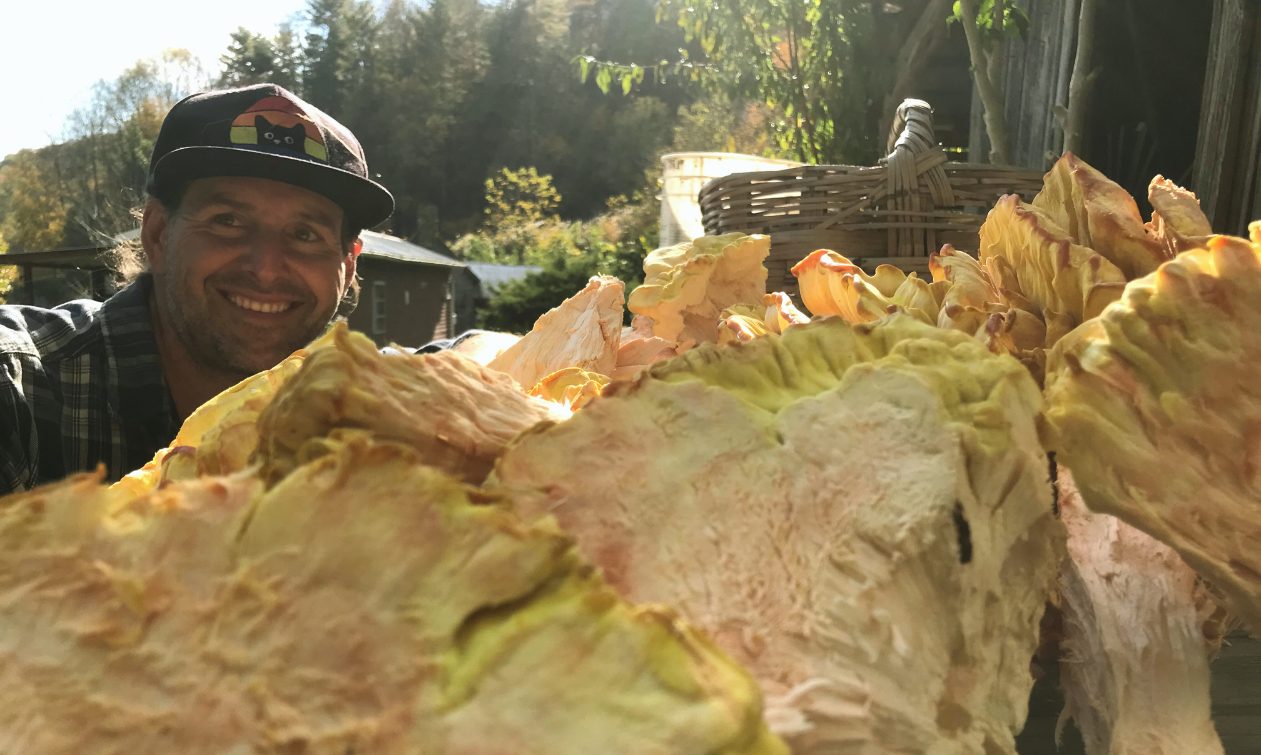
You met the lobster patch at the top of this page: one wild patch, more than doubled over six years, as Chris tells it, through the way he harvests. “You create more of the things,” as they put it. That’s the cycle, working, out in the woods.
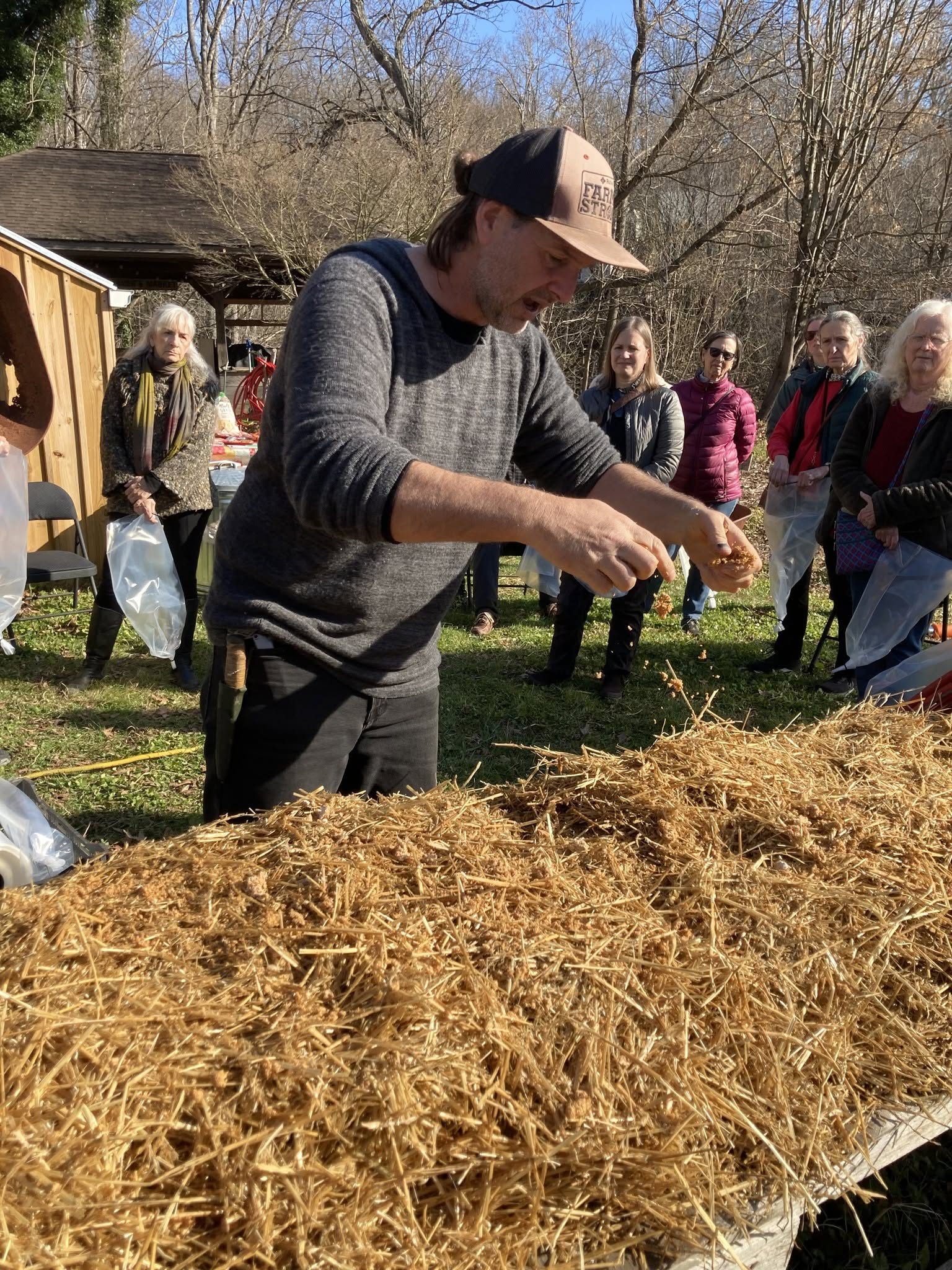
The same thing works at home, on what everyone else throws away: sawdust, straw, spent logs. 2.5 pounds of grain spawn can become more than 60 pounds of mushrooms in one generation.
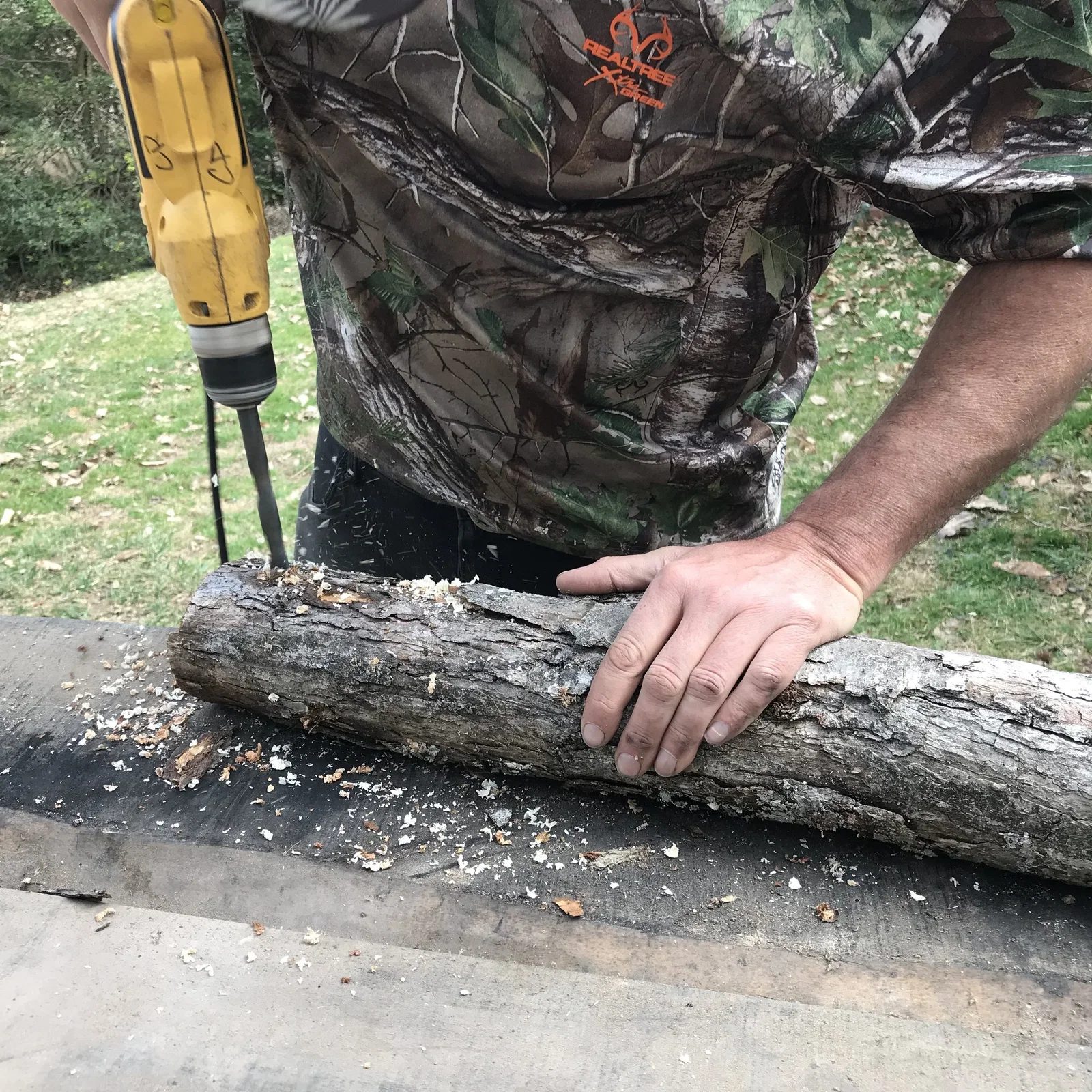
Inoculated logs keep flushing for five to seven years. Spent substrate feeds the garden that feeds you. In the founders’ own words: out of death comes life. And the cycle keeps turning.
It starts slow, because that’s what the biology does.
Mycelium colonizes quietly through the substrate, invisible, before it ever fruits. That is not wasted time. That is how abundance gets built.
The starter course exists to give your cycle its First Turn, and it’s built as three steps, one for each of the ways growers most often get stuck:
The 28 sequenced modules and the shipped kit. For the ones who got stuck on sequence and equipment.
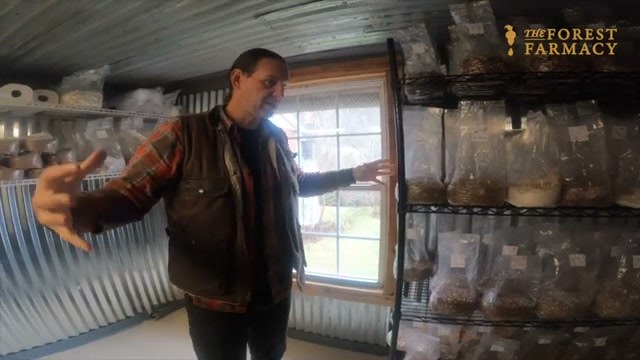
The weekly live calls. For the ones who tried it alone, with no one to read the grow.
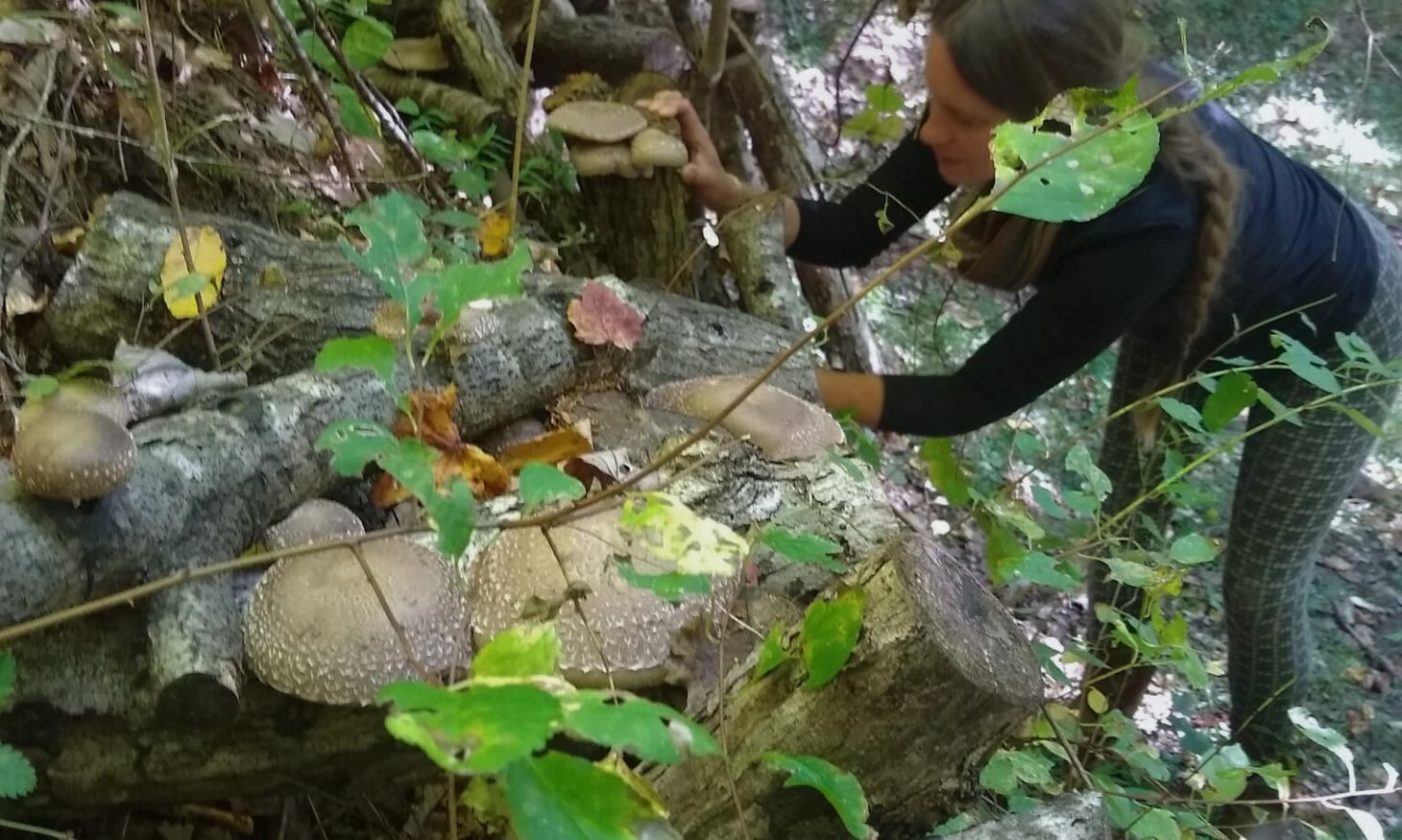
Katherine’s part of the room. For the ones who quit in the quiet stretch, when nothing visible is happening and every instinct says it isn’t working. Chris tends the grow. Katherine tends the grower.
Eggs and flowers at the farmer’s market. He’d tried mushrooms on his own first: “probably started at the wrong end… didn’t really understand the fundamentals.”
On why the course works where the internet didn’t: “It’s a lot easier to ask someone who’s had that experience directly, as opposed to searching the internet.”
And where he stands now: “I would recommend it so far… I like the community aspect… and that coaching from Chris.”
“I had read Paul Stamets’ books on mushroom cultivation, but it wasn’t until I physically worked alongside Chris and Katherine, ‘the mushroom masters’, that the information truly took root.”
Chuck Hunner
He was studying at the Arborvitae School of Traditional Herbalism in New Paltz, New York, when he heard Chris on the Mountain Rose Herbs podcast: “I listened to Christopher’s interview on the Mountain Rose Herbs Podcast and was fascinated by what he had to say, especially about increasing the Vitamin D content in mushrooms through sun exposure.”
He wrote to them the way people do at the start: “I am very much excited to learn all I can about mycelium and their fruiting body friends… I will save my questions for now as I don’t know what to ask yet.”
Then he enrolled in the year-long program. Not someone starting from nothing: someone trained, filling the one gap the training left.
She came in after Hurricane Helene with a clear idea of what she wanted to be able to produce herself, and mushrooms were the part she had never been taught.
“You can get the basics off of YouTube, maybe, but the details, the nuances are where it’s at… what makes you be able to do it consistently, not just have a one-off.”
Katherine Parker
This course was built for people who already grow, find, or make things, and who are done being a spectator to the one thing they haven’t brought home yet.
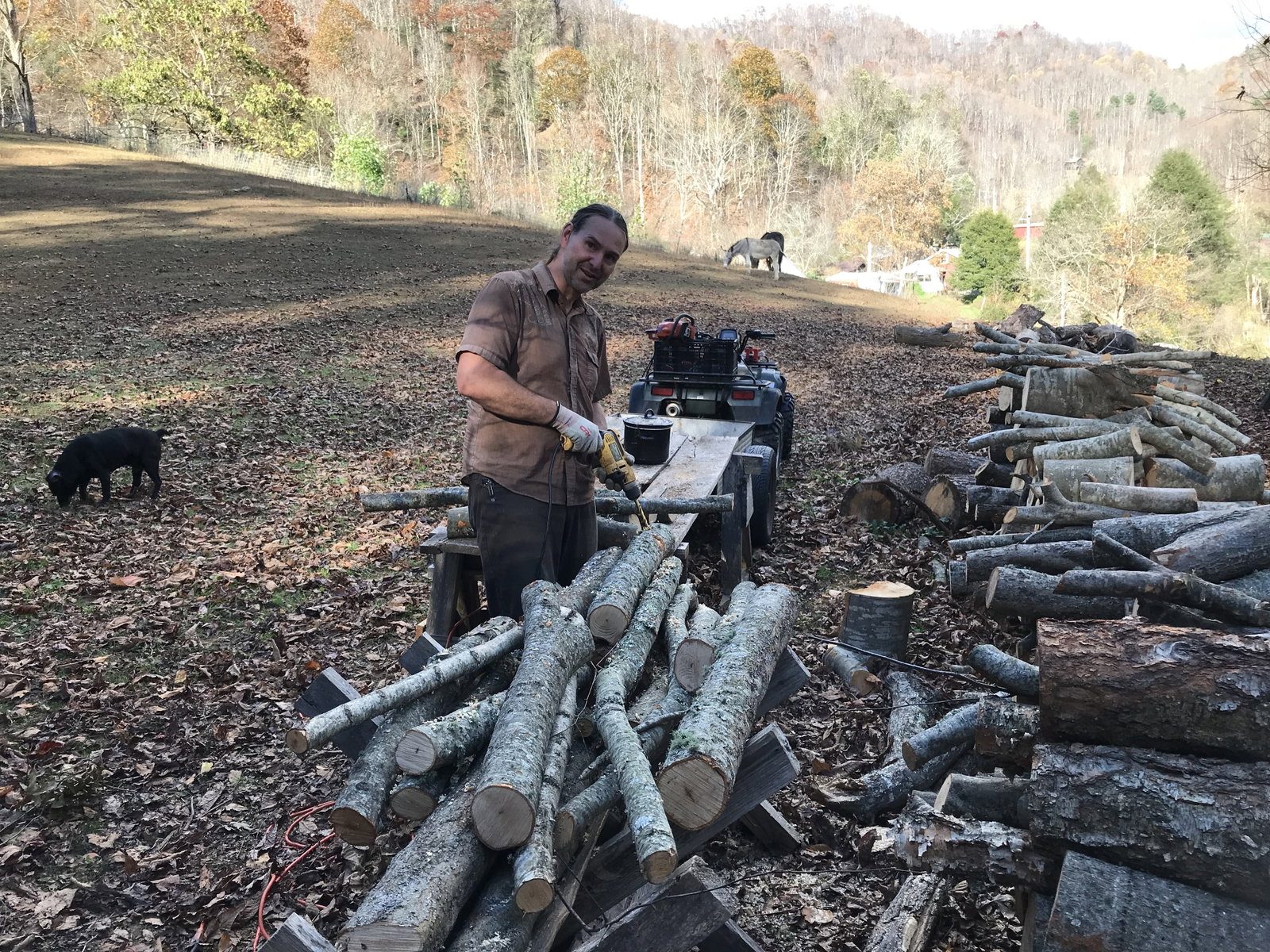
Maybe there’s an enterprise spreadsheet on your kitchen table, and a corner of a barn that’s been sitting there asking you the same question every day.
You don’t need a lifestyle. You need to know whether this adds up against your real buildings and your real hours, taught by someone who farms for a living. That’s what the weekly calls and the feasibility answers above are for.
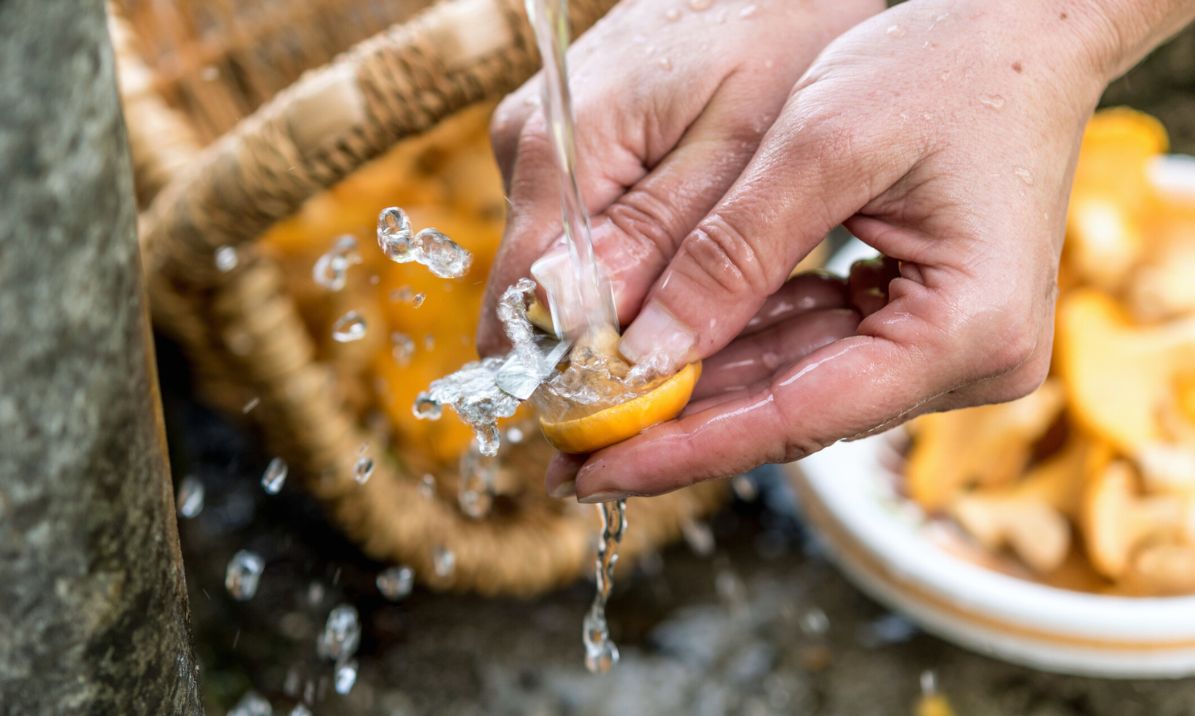
Maybe there’s one shelf in your apothecary you still outsource, and it bothers you more than you say out loud. You already know what you want to do with the medicine.
This is where you learn to take responsibility for the organism behind it, in a weekly room where you can bring the work while you’re still learning it.
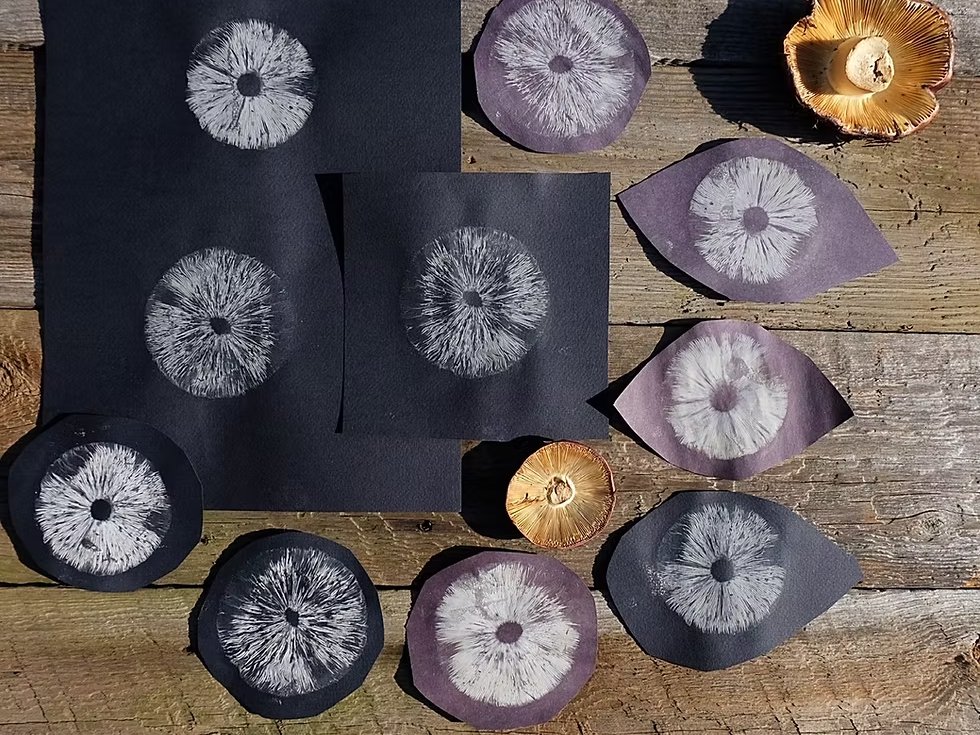
Maybe there are spore prints in a drawer. Finds you meant to keep and couldn’t.
You already know how to find the mushroom; this is where you learn to grow, so the woods stop being the only place it exists for you.
And it is not for everyone. If you want a harvest by the weekend, this will frustrate you; the founders teach the pace the organism actually runs at.
If you want a video library to own and never open, cheaper ones exist. This course assumes you’ll show up to a call, hold up a jar, a bag or a bucket, and let someone see your work before it’s perfect. That’s the whole method.
$900
or three payments of $300
That’s the whole price. No tiers, no upsell maze, no countdown timer pretending it’s about to change.
Katherine sat down and priced the components herself, at what each would cost on its own. Her math came to about $2,087. The course is $900. One more number sits next to it: private time with Chris runs $150 an hour, and you get him and Katherine live every week for six months.
If you’re comparing this to a $25 club workshop or a one-day foraging class, you’re comparing a fragment to the whole. Those classes are real and worth taking. They also hand you one piece, once, and wish you luck assembling the rest across years of Saturdays.
If you’re comparing this to what a new farm enterprise usually costs to trial, you already know $900 with a capped downside is a small pilot. You’ve spent more finding out less.
And if you’re adding up what the free route has already cost you, the dead kits, the gear bought twice, the seasons, you don’t need us to finish that math.
This course is the assembled version: the full sequence, the living materials at your door, and the instructor between sessions, every week, for six months.
$900, or 3 payments of $300 · 14-day review window · supplies ship after day 14
Fourteen days to look at everything.
You get 14 days to review everything. If you decide inside that window that this isn’t for you, you get your money back.
Here’s the part that isn’t standard: the supplies deliberately do not ship until after day 14.
Your first two weeks are for deciding, with clear eyes. Nothing perishable has shipped. Nothing is half-used on your counter making the refund feel complicated. If you leave inside the window, you leave clean, and the founders take the loss of the time you spent with them.
They built it that way on purpose, so the review period is real instead of theoretical. We have not found another school that structures it this way.
That is what terms look like when the people who wrote them expect you to check. So check them: the exact terms are on the site, and they’re short.
Nobody types that into a checkout page. Plenty of people think it there.
So let’s put it in the open. If you’ve failed at this before, here’s a different reading of it. Not “it wasn’t your fault,” said cheaply. A question: what would have happened, that season, if someone with 35 years of pattern recognition had looked at the bucket or bag with you that week?
For many growers, failure wasn’t a verdict. It was what happens when nobody’s looking with you. And the fix is somebody looking with you, not a better you.
That’s why the third step of this course exists at all. Chris can teach anyone the process; that’s the easy half.
Katherine’s work, the part they call Tending the Grower, is for the stretch where, for many growers, the grow quietly dies: the quiet weeks when the mycelium is colonizing invisibly and every instinct you have says nothing is happening, it isn’t working, people like me don’t finish things like this.
The founders’ whole pedagogy has a phrase for what they ask of you instead: the willingness to fail joyously. You bring what failed to a weekly call, it gets read, and it gets fixed. In their own words: slow, methodical, and paying attention is what gets you to the finish line. The course is that sentence, turned into a weekly practice.
Chris will tell you the bucket is normal. Katherine will tell you that you are.
You don’t have to trust yourself yet. That’s what the room is for.
The calls are a live group room, not scheduled one-on-one reviews.
You bring your jars, photos, and questions and put them to the founders live, and you’ll learn from every other grow in the room too.
Watching Chris work through a jar or a bucket that isn’t yours is how you learn to read the one that is.
That question is exactly what the weekly calls are for. Bring photos of your actual space, your climate, your species, your bags or bucket, and ask about your situation, not a generic one.
The methods start budget-friendly and are built for buildings people already own; you don’t need a lab or a $15,000 autoclave to begin. There’s no personalization feature to buy here.
There’s a live room, every week, for twice as long as the curriculum runs, and what you bring to it is what gets worked on.
Because your first cycles won’t be done in three. The curriculum ends; the questions don’t.
The support is built to outlast the course on purpose.
The first supply shipment goes out after day 14: nothing perishable arrives while you’re still deciding.
Growing supplies (liquid culture, spore syringe, plug and sawdust spawn, jar lids) arrive in two shipments across the course.
Fourteen days from enrollment to review everything; decide it’s not for you inside that window and you get your money back.
The exact terms are on the site, and they’re short. Read them before you buy. That’s what they’re for.
No. Nowhere in the U.S. do you need a license to sell the mushrooms you grow. States can differ on things like cottage food registration or where you’re allowed to sell, so if you want the specifics for your state, that’s a good one to bring to the weekly calls.
You keep growing; the six months of calls carry you well past the curriculum.
For those who want to go all the way in, a 12-month regenerative farming certification exists as the path beyond. You don’t need to think about that today.
Because the calendar is real. Farm days run in June and September and cap at 25 people, with fewer than 12 seats for online students.
Growing runs on seasons, not on our schedule or yours. A cycle started this month is colonizing; a cycle postponed is still a folder of bookmarks. No countdown timer. Just a farm, and a year that keeps moving whether you start or not.
Here’s the crossroads, without drama, because you’ve been standing at it longer than today.
You close this tab. Nothing bad happens. The drawer stays where it is, the barn corner keeps its question, and “still researching” stays true at dinner, the way it’s been true for a while now.
The people who ask how the mushroom thing is going will, eventually, stop asking. That’s all. It’s quiet, that path. That’s the problem with it.
It’s early one morning a few months from now, and the coffee’s on. You walk over to the shelf before you check your phone, because the shelf is more interesting than your phone now. Pins where pins should be.
You take the photo, not because anything’s wrong, but because the weekly call is where your questions go now, and you have a good one this week. There’s a harvest coming, the one these three months are built to get you to: one you understand, from a grow you can read, in a space that used to just sit there. The question at dinner gets answered with a plate.
Same person. Same buildings. Same hands. The difference is one decision and one turned cycle.
You would not be starting from zero here. You would be continuing something you already started.
Scroll to the button below. Click it. Choose full payment ($900) or three payments of $300. That’s the whole process: you’re in, the modules run in order, the calls run weekly, and a live call with Chris and Katherine is never more than a week away.
Fourteen days to review everything with nothing perishable shipped. Terms you can check. A founder with 35 years in this craft, and both of them answering your questions live every week.
The cycle starts with one turn. This is yours.
14-day review window · nothing perishable ships until it closes · calls run six months
P.S. If you came this far down the page, weigh this one fact: they hold your supplies until your review window has passed, on purpose, so that leaving stays easy exactly as long as you might want to leave. That’s what terms look like when the plan is to earn the next six months, not the next click.