Free live workshop · From the founders of a working mushroom farm in Marshall, North Carolina
On September 30, Chris and Katherine Parker, PhD, the research psychologist who co-wrote
the book, teach mushroom cultivation live for 90 minutes and
answer your questions on the call.
Chris has spent 35 years turning sawdust, straw, and slash-pile logs into food and
medicine, on a budget that doesn’t need a lab.
Free class starts in
Free to attend. No card needed.
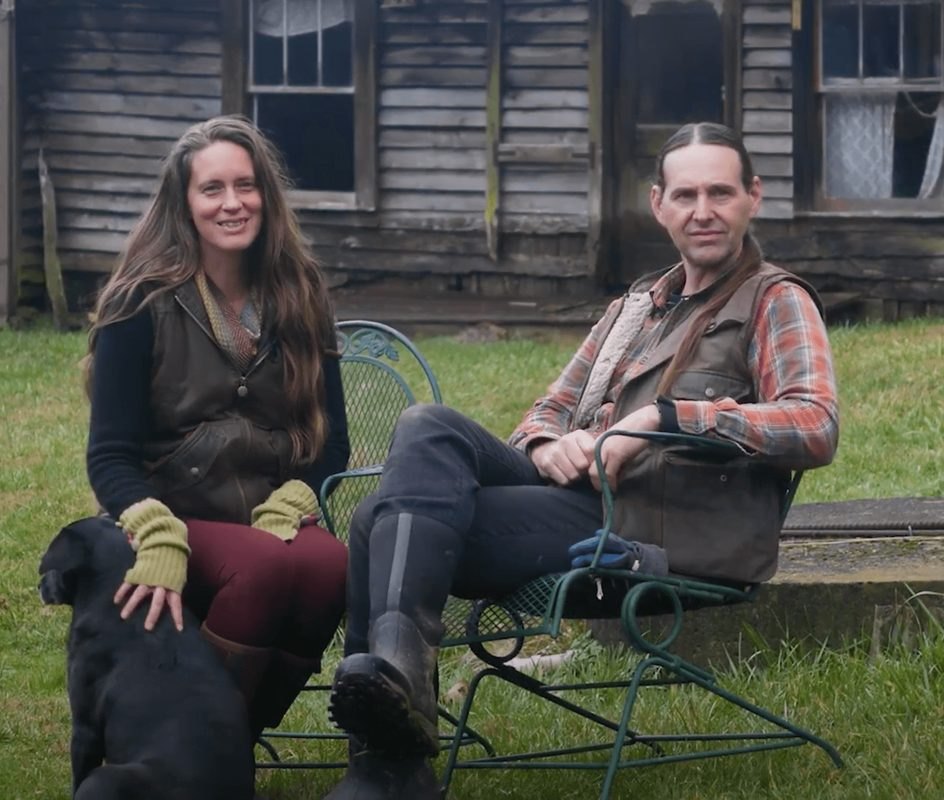
“We’re Not Influencers. We’re Farmers.”
If you’ve tried before, you know the part nobody warns you about. Not the failure itself.
The silence after it.
The jar goes wrong, and you’re left refreshing a forum thread late at night, comparing your grey fuzz to somebody else’s photo, guessing.
Did anyone ever look at your grow with you?
Not a thread. Not a video.
A person, with decades of pattern behind their eyes, looking at your jar and telling you what it’s telling you.
For many growers who quit, information was never the shortage.
You could find ten videos on inoculation tonight.
What you could not find was someone who would look at what went wrong in yours and name it.
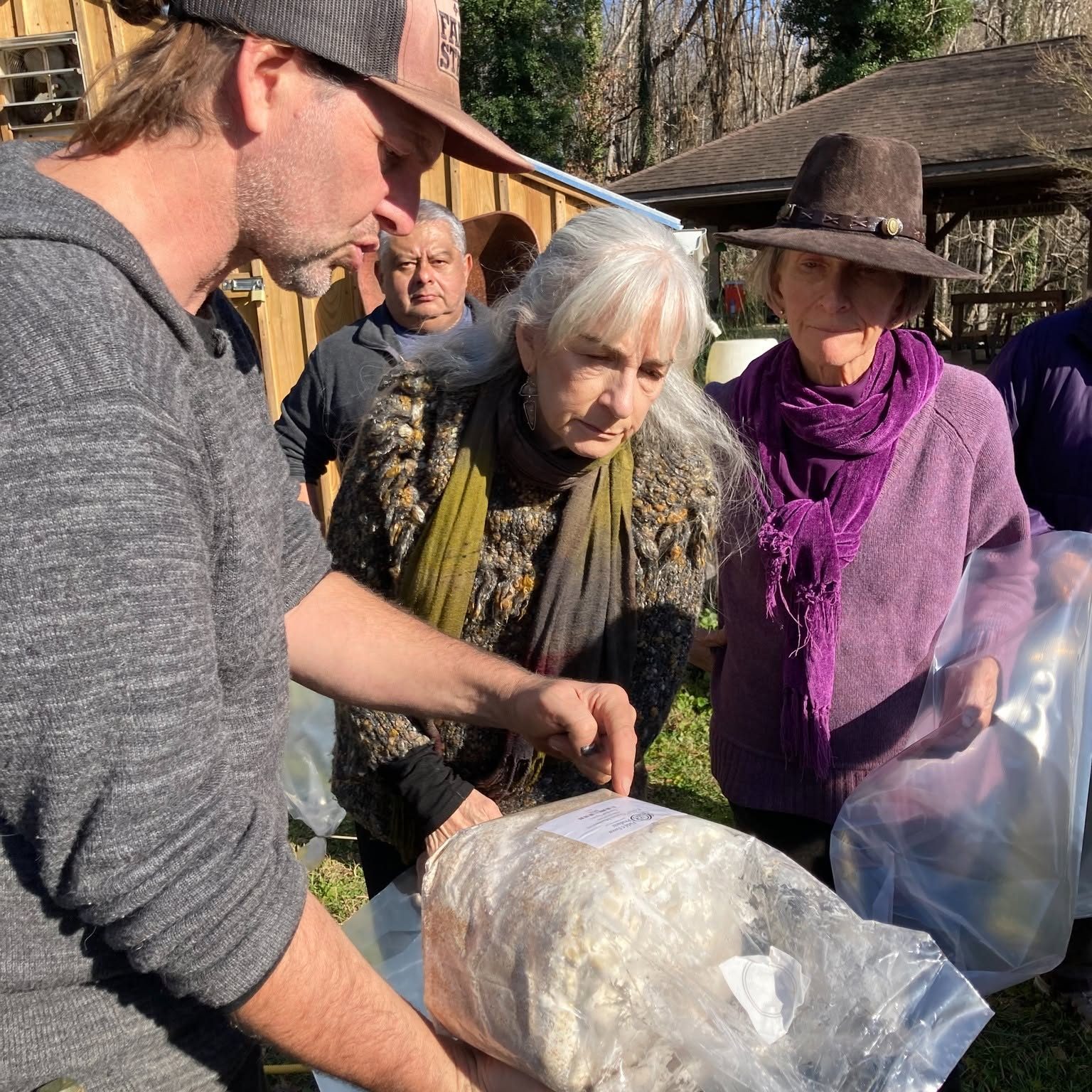
Chris has spent 35 years building that eye. Ninety minutes on September 30 is where you borrow it.
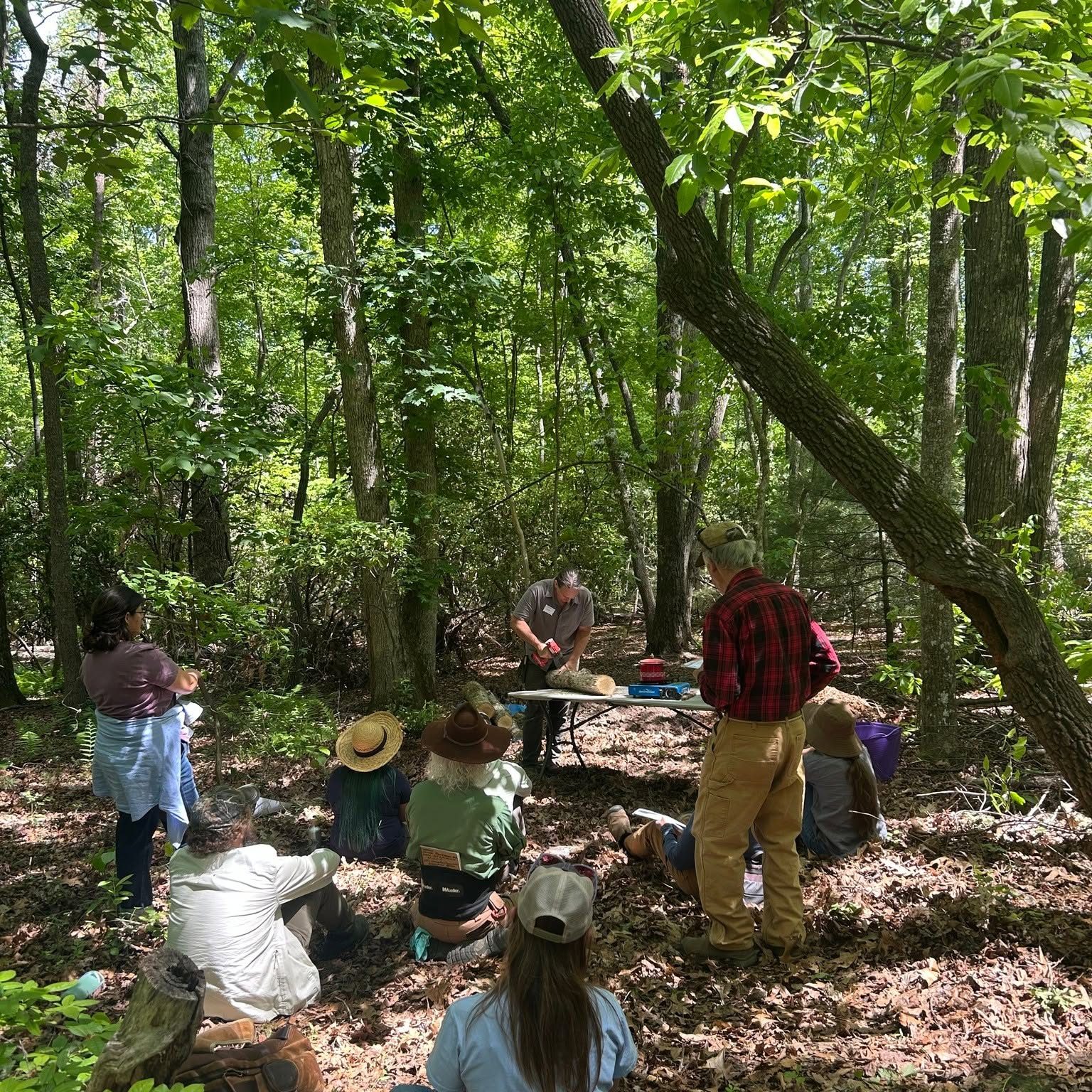
He and Katherine teach the cycle live, and then they take your questions: your barn, your basement, your jar. At a recent session they were answering attendees’ situations by name: their barns, their basements, their woodlots.
That is the whole reason this is live, and not another video.
The workshop runs 90 minutes, and then the call is yours. Three worth bringing:
What did Chris do to more than double a wild lobster-mushroom patch, and what does that say about what’s possible on your own land?
Why are the slow first weeks colonization and not failure, and how do you tell the difference while it’s happening to you?
How do you start without a lab, and which of the buildings and byproducts you already own actually count?
Free to attend. No card needed.
None of that is starting from zero. It’s continuing something you already started.
And if what you’re after is easy and fast: the internet is full of people selling that. It is not fast. It is real.
When Chris Parker, a member of the Eastern Band of Cherokee Indians, went looking for how to grow mushrooms, the available knowledge was two library books, and half of what was in them was wrong.
He learned the way you learn when there’s nobody to ask: grow, fail, watch closely, grow again. Thirty-five years of that became a commercial farm in Marshall, North Carolina, and a library of mushroom cultures adapted to the mountains it sits in.
It has not been a gentle 35 years. In 2018, a flood took a decade of his work in a matter of hours. And recently, a contamination still cost thousands of dollars in substrate and a month of vigilance.
Those failures are on this page on purpose. If you’ve stopped believing anyone in this space, the people who only ever show you the harvest are a large part of why.
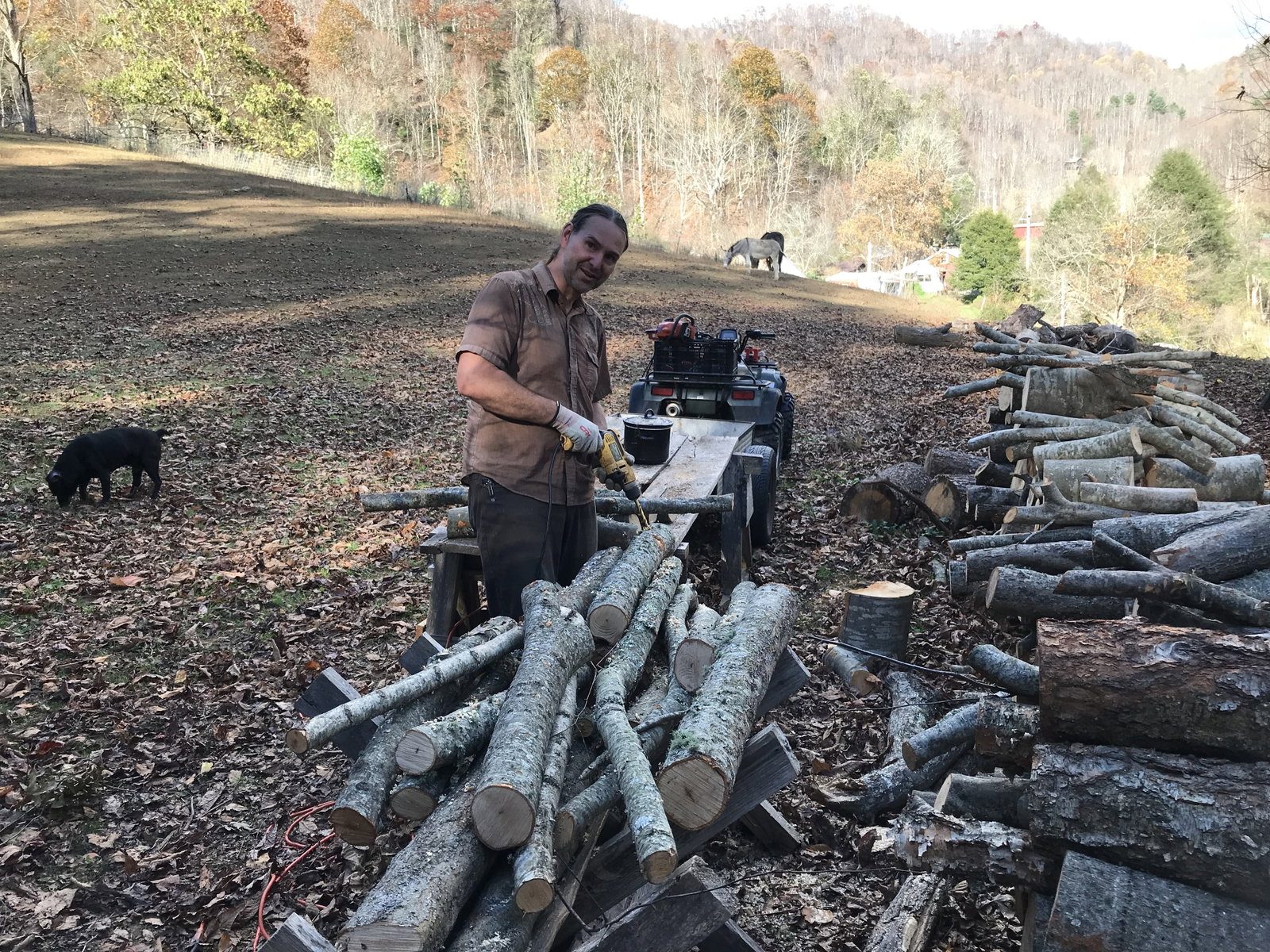
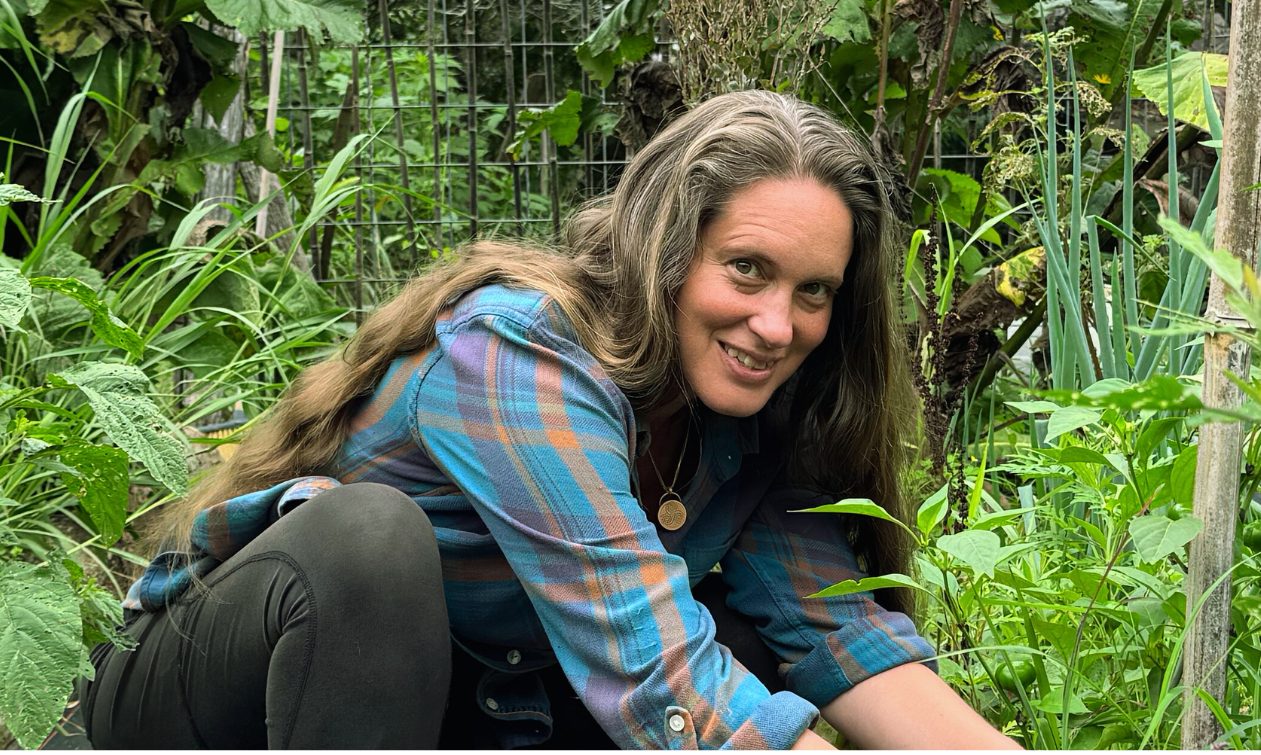
Katherine Parker, PhD, is the other half of why the teaching works.
A research psychologist with 15 years of designing curricula, she works on the part of growing that happens in the grower: the slow early stretch where nothing visible is happening and every instinct says quit. Chris tends the grow. Katherine tends the grower.
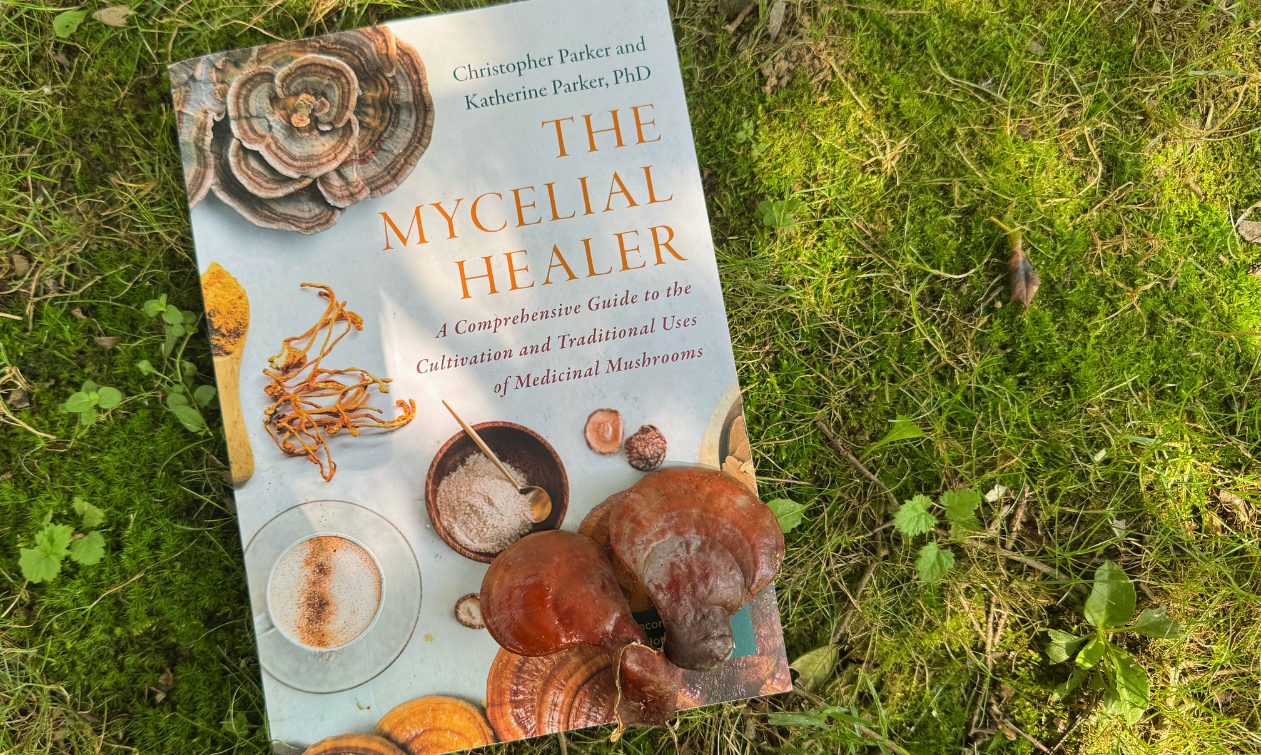
Together they wrote The Mycelial Healer, published by Chelsea Green.
You’ve watched people lie about mushrooms for years. So this page won’t ask for your trust; it will show you where to look.
And the people who’ve stood next to them:
“I had read Paul Stamets’ books on mushroom cultivation, but it wasn’t until I physically worked alongside Chris and Katherine, ‘the mushroom masters’, that the information truly took root.”
Chuck Hunner
“It’s a lot easier to ask someone who’s had that experience directly, as opposed to searching the internet.”
Pete, farmer, Ashe County, NC
And Katherine herself, on why the free videos never quite got you there: “You can get the basics off of YouTube, maybe, but the details, the nuances are where it’s at… what makes you be able to do it consistently, not just have a one-off.”
Yes. Attending costs nothing and there’s no card to enter. You give us your name and email, and your Zoom link comes straight to your inbox.
Less than you’ve probably been told. Chris teaches budget-friendly methods that start without a lab, and without the $15,000 autoclave the people who teach this online keep insisting on. If you’ve got a barn corner, a shed, a basement, or a sawdust pile, you’re closer than you think. The method is built to fit buildings people already own, not to demand new ones.
No. This session is about how to start. If you already grow, find, or make things, you’re closer than you think.
Then bring that story. Failure doesn’t disqualify you here; it’s raw material. Chris and Katherine teach what they practice: fail, fail joyously, and relearn. The call is where second attempts get looked at.
Mushrooms have a long history as traditional folk remedies across nearly every continent, and that history is documented at length in the book.
What we’re not claiming is a treatment or a cure: nobody here is making medical promises.
It’s a workshop, taught live, with your questions answered on the call. If you decide afterward that you want to keep working with Chris and Katherine, there will be a way to ask about that. The only decision this page asks of you is a seat.
These workshops run live and monthly; this page registers you for the September 30 session. If you can be there live, be there live: the call is where your own barn, shelf, or drawer of spore prints gets talked about.
Wednesday, September 30, 2026, at 6:00 PM ET. Ninety minutes, live, both founders teaching, your questions answered on the call. Free to attend. Thirty-five years of growing on one side of the screen; a chair for you on the other.
There will be another workshop in a month; there always is. But the session where you can put your own jar in front of them is the one you’re in the room for. Not beginning. Continuing something you already started.
Free class starts in
Free to attend · no card needed · live Q&A with the founders
The next season is coming either way.